AI-powered learning tools for neurodiverse children
At GambIT, we're building software that meets children where they are — adaptive, evidence-based, and designed from the ground up for learners who don't fit a one-size-fits-all classroom.
Why we're building this
01
Children with dyslexia and other learning differences are under-served by mainstream educational software. Most apps assume a neurotypical learner and bolt on accessibility features as an afterthought. We're taking the opposite approach: starting from the cognitive science of how neurodiverse children actually learn, and building tools around that.
Our products combine evidence-based pedagogy — Orton-Gillingham, Structured Word Inquiry, informed by Davis Dyslexia Correction — with modern AI to deliver genuinely adaptive, child-friendly learning experiences.
Spelling Tutor (Spelling Adventure)
Adaptive spelling practice for UK Key Stage 1-2
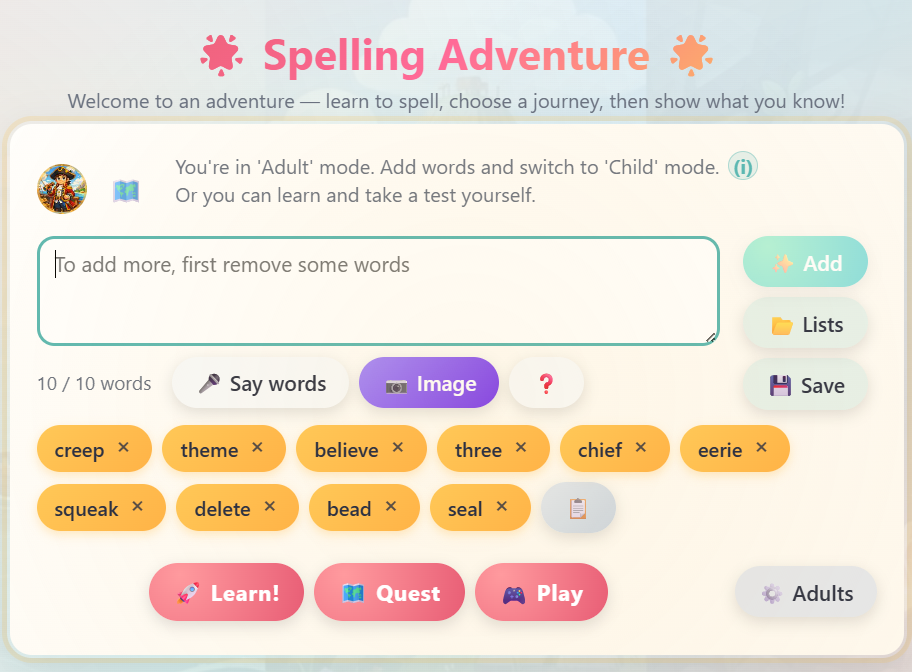
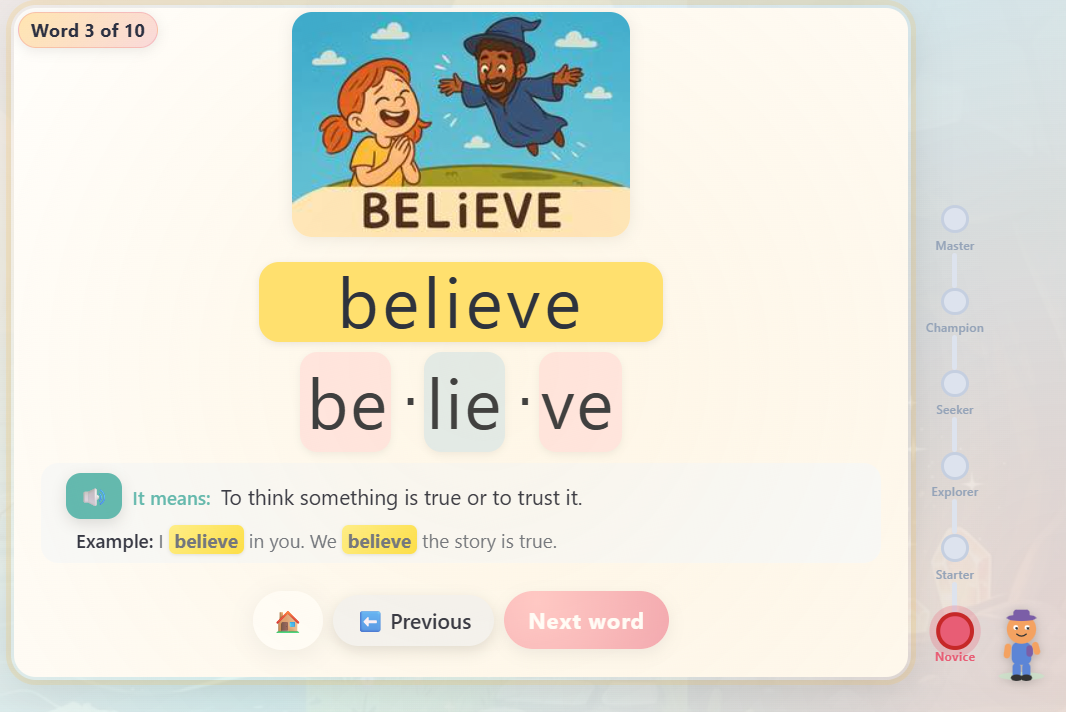
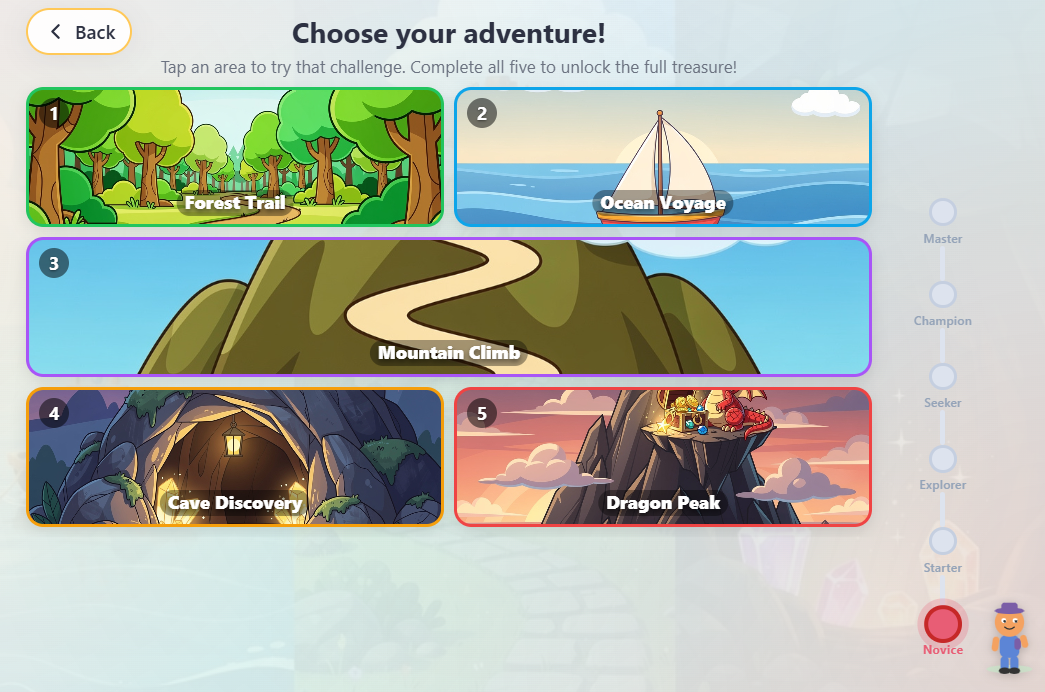
Spelling Tutor helps children master UK national curriculum spelling through short, engaging sessions tailored to how they learn best. The app encodes five evidence-based word breakdown methods and adapts dynamically based on observed progress.
Key features:
- Phonics-first methodology with pill-based word chunking
- Dyslexia-friendly fonts (Andika, ABeeZee) and pastel colour design
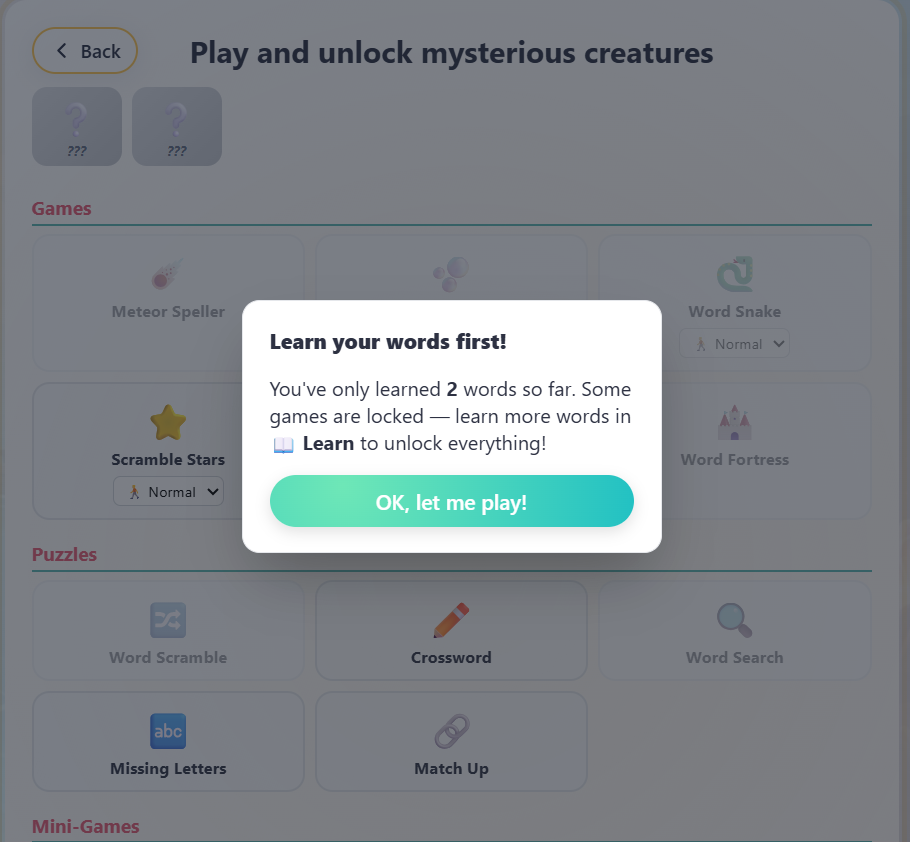
- Engagement mechanics including creature collection and mystery image reveals
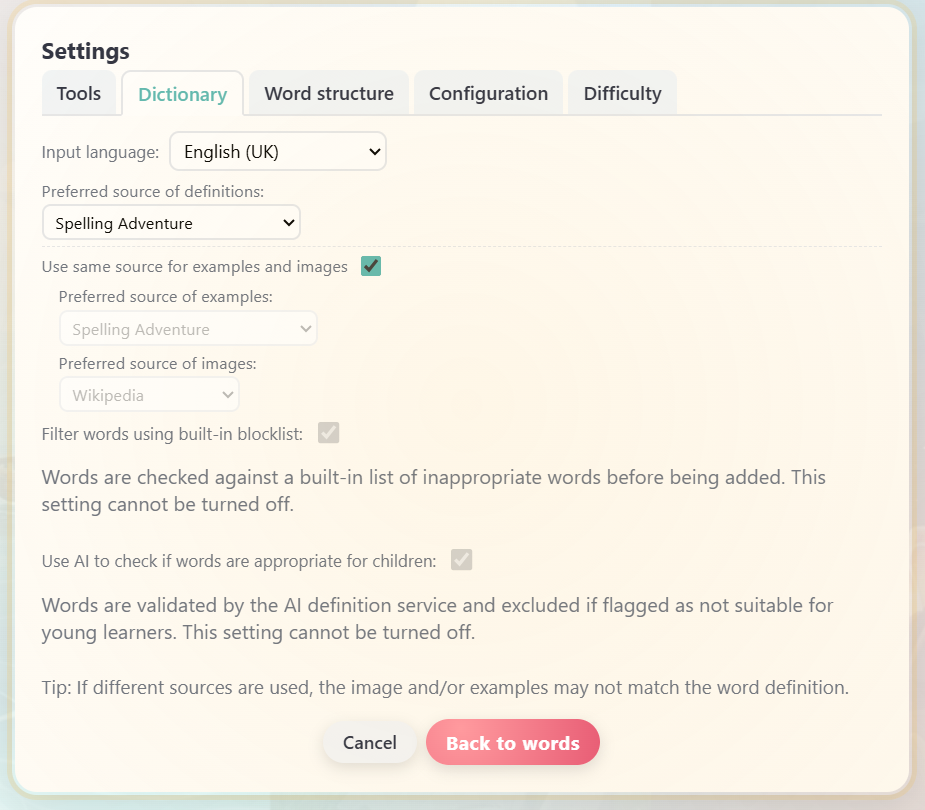
- Content-filtered AI integration for child-safe interactions
- Aligned to UK National Curriculum KS1-2 spelling lists
Status: Alpha testing with UK Year 3 pupils. Beta release planned for Q3'26.
02
Our products are built on Microsoft Azure and the OpenAI Foundry models, using React and Three.js on the client and Node.js services on the back end. We use algorithmic content generation alongside LLM-based personalisation to keep runtime costs low and response times fast — important for sustaining engagement with young learners.
Built on a modern AI stack
03
Dyslexia-informed maths homework support
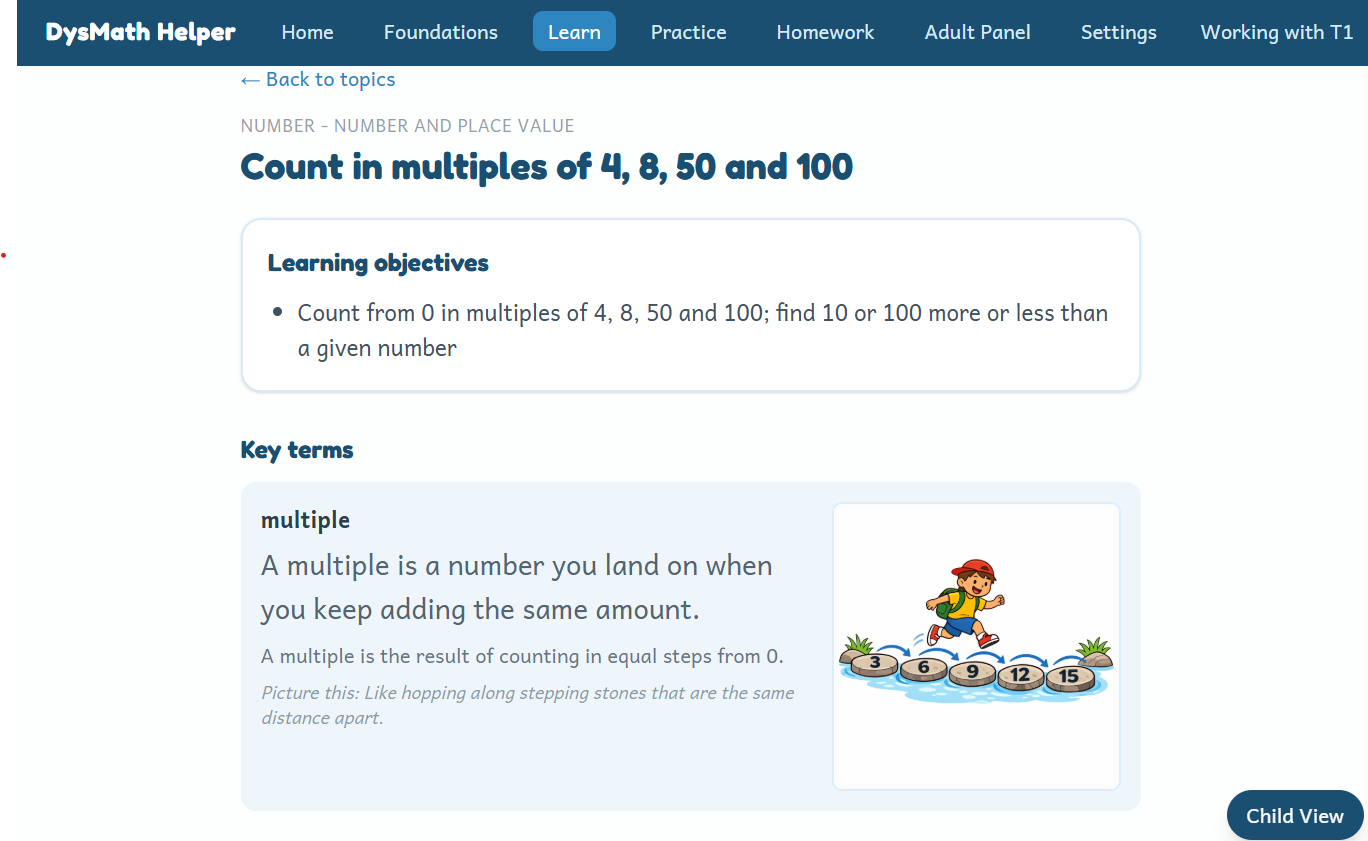
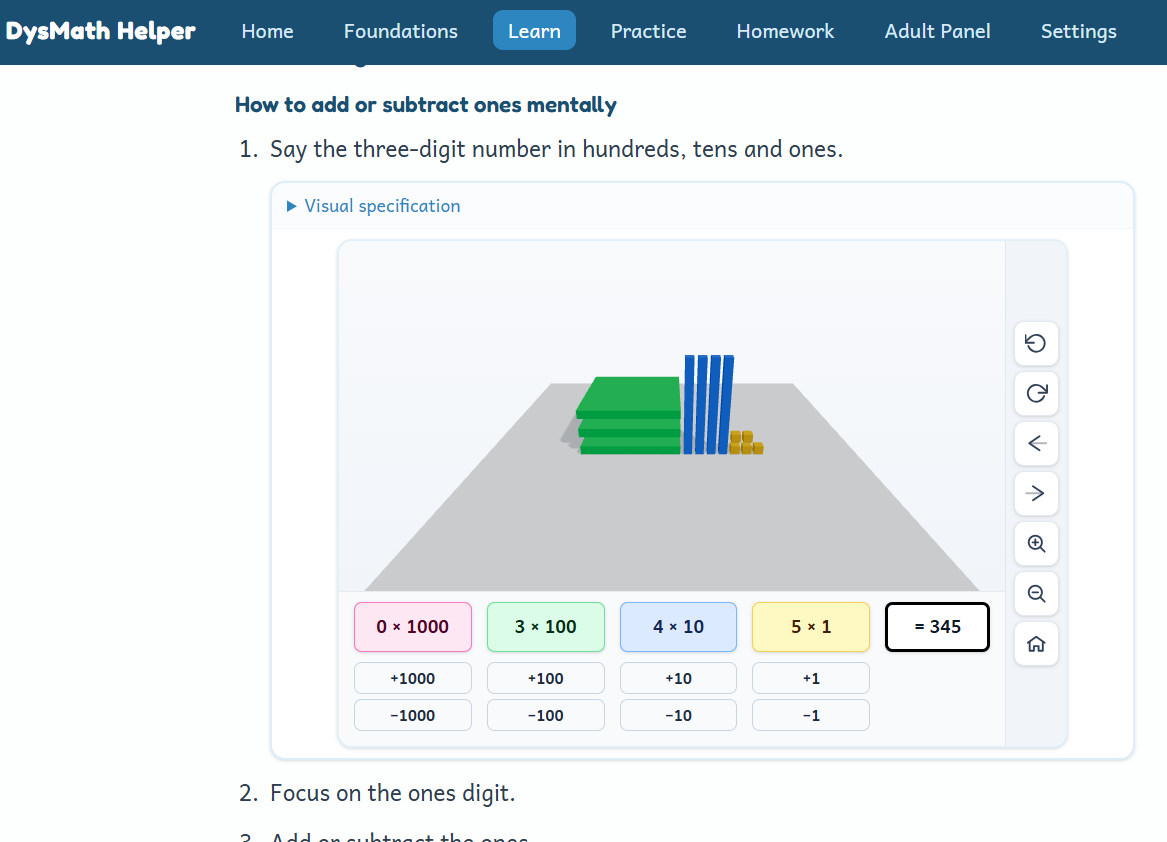
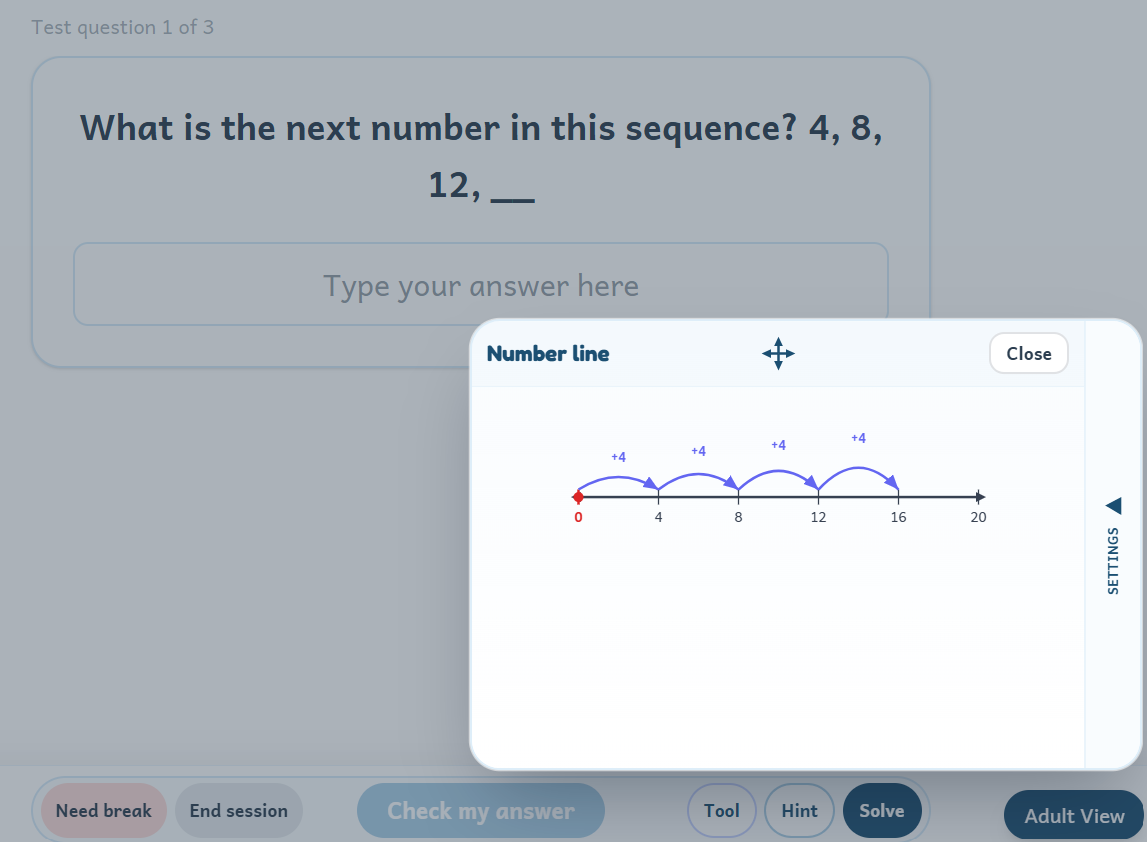
DysMath Helper is a maths companion app designed specifically for neurodiverse pupils. Rather than drilling procedures, it uses 3D visual manipulatives and the Davis Dyslexia Correction method to help children build intuitive, lasting understanding of mathematical concepts.
Key features:
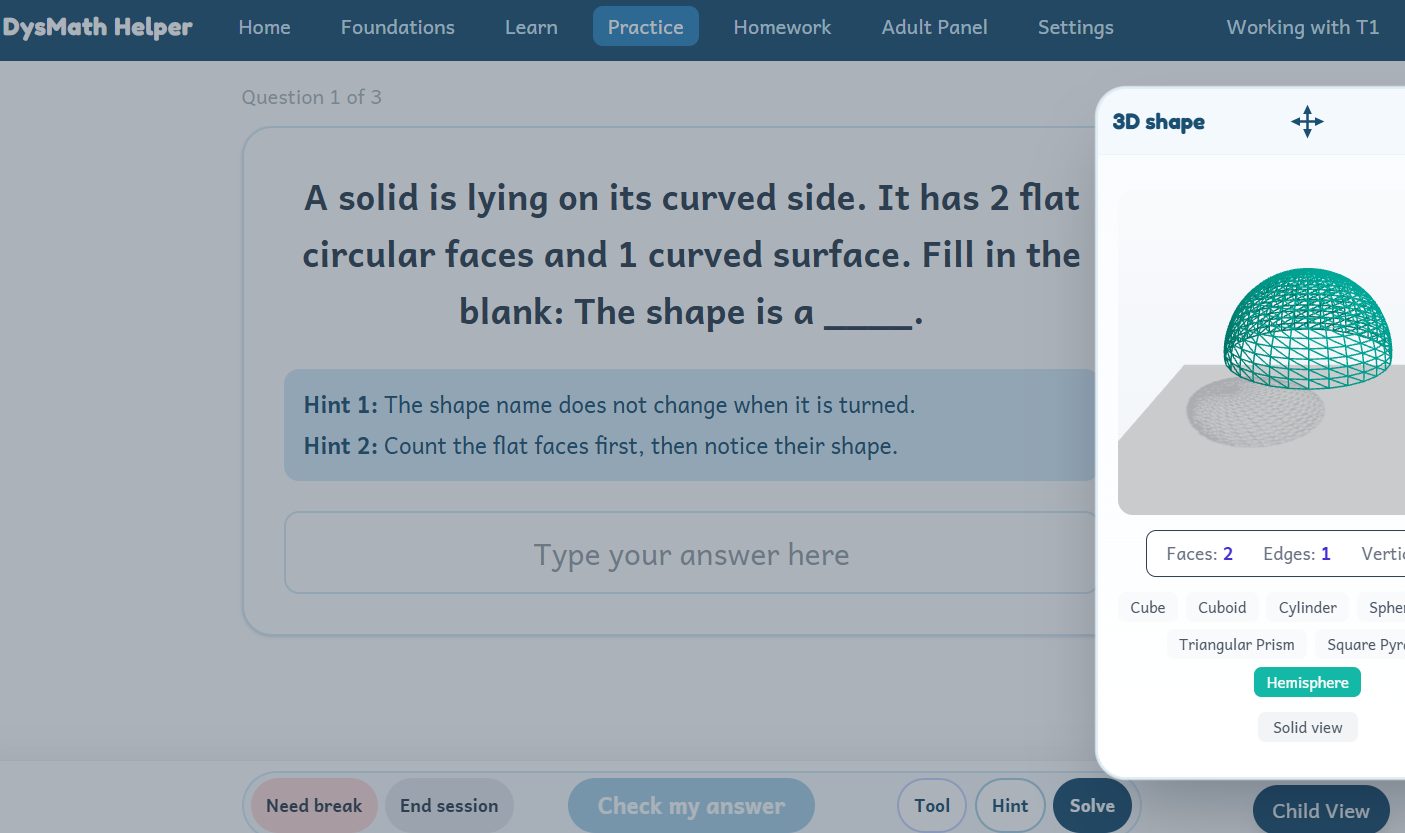
- Three.js-powered 3D manipulatives for visual-spatial learners
- Informed by the Davis-method orientation
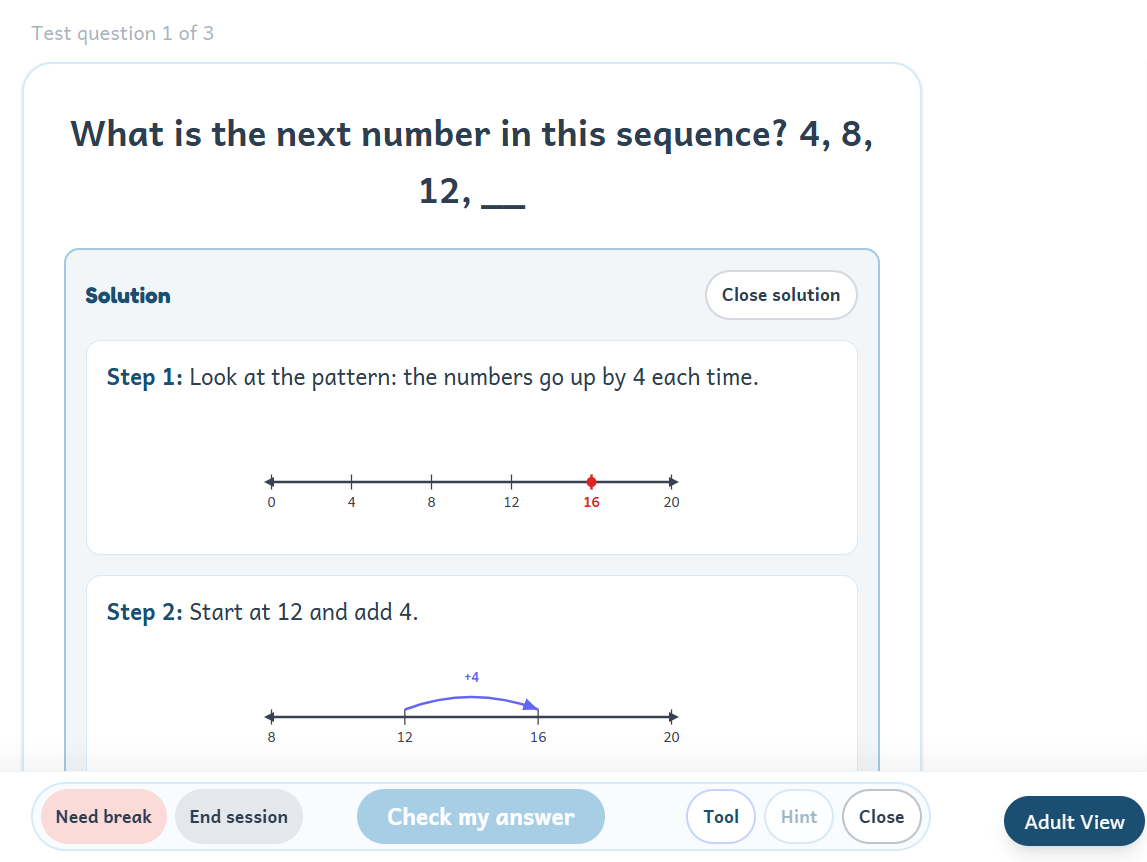
- Algorithmic question generation engine — minimises AI runtime cost while maximising practice variety
- Adaptive difficulty informed by per-child performance signals
- Designed for KS2 homework support
Status: In active development. Implementation underway; beta testing planned for Q4'26.